Fulfillment Operations

Explore practical order fulfillment, 3PL operations, reverse logistics, and cold-chain guidance for brands evaluating fulfillment partners and fulfillment workflows.

Fulfillment Center Vs. Warehousing: Which one is better for your business?  

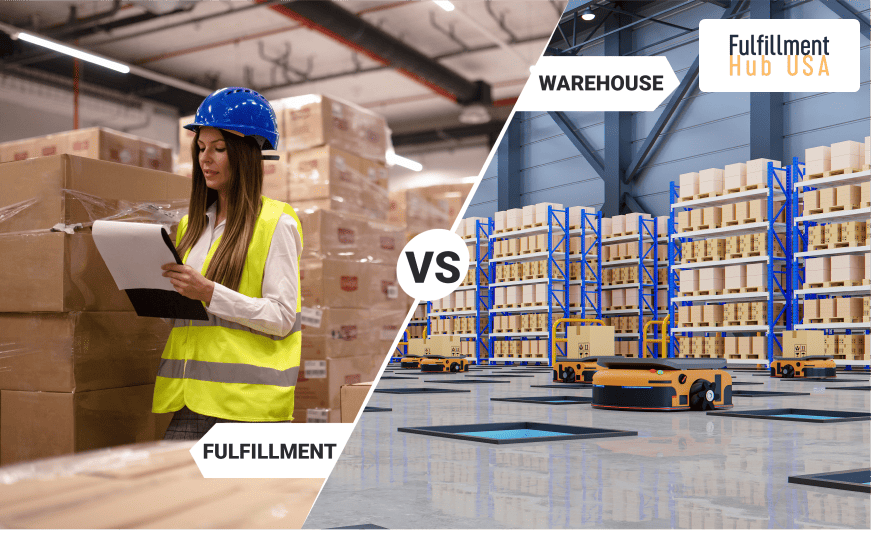
What makes e-commerce the best type of business is that it gives its owner freedom from a brick-and-mortar shop. A responsive and pretty-looking website can successfully act as an online store to sell your products. Nevertheless, eCommerce owners are still left with the most important burden to unload – storing inventory!    The most important element of an e-commerce business: Inventory storage For smaller e-commerce businesses, makeshift places like a home office or garage will suffice to store the products temporarily; however, as time passes and business outgrows your space, you will need a bigger place to store and a bigger team to pack and ship your products.   Owners of e-commerce businesses in the growth stage often find themselves in the dilemma of deciding whether to choose a warehousing solution or a fulfillment solution for managing and storing their inventory. If you, too, are stuck in the dilemma of deciding which one is better for your business, this article will help you understand how a warehouse is different from a fulfillment center.    What is a warehouse? A warehouse is a large building or an industrial space used mainly to store goods that await distribution to their designated destinations. Due to their large sizes, warehouses are typically located on the city’s outskirts, and some are located right at the seaports and airports for easy loading and unloading.    Primary customers for warehouses are B2B businesses and wholesalers since these people deal in large volume of products which, of course, need a huge space to be stored. A typical warehouse consists of shelves and racks with products stored in them. Operations in a warehouse are usually pretty much static, with forklifts moving around goods that shall be used later.    Many e-commerce companies with a high volume of goods moving out every day have their own warehouses. However, renting or leasing a shared warehouse space is much more cost-efficient for small and medium-sized businesses. In addition, warehousing companies often store goods of multiple companies under the same roof as they offer their space for various enterprises.  Types of warehouses: There are different types of warehouses, depending upon the type of goods you deal with, you can choose the type of warehouse that suits you best.  Public warehouse: Public warehouses are government-owned buildings that are open for both private business and personal use. Often offered at a lower price, public warehouses are your best option compared to other warehouse types if you are looking to store your goods for a shorter term.  Private warehouse: This type of warehouse is owned by wholesalers, distributors, manufacturers, or even a warehousing company that offers space for other businesses. Priced slightly higher than a public warehouse, it is suitable for SMB owners planning a long-term strategic presence in a particular region.  Automated warehouse: An automated warehouse is a warehouse that is equipped with modern technologies like robots, the internet of things, and artificial intelligence to reduce the number of full-time employees and human errors.     Climate-controlled warehouses:  Climate-controlled warehouses are designed to store perishable and temperature-sensitive items like meat, food, ice creams, or dairy items that require refrigeration.  On-demand warehouse:  On-demand warehouses are facilities offered on a temporary basis for businesses that need an ad hoc storage solution for their goods. Billing for the space utilized is generated on a month-to-month basis.    Distribution center: Distribution centers provide storage facilities to businesses that usually look to distribute their products within a short period of time – a day or two. It receives a large shipment, and the products are quickly distributed within a day.    What are the general characteristics of an ideal warehouse: As you have read above, there are many warehousing solutions available for storing goods. However, there are some general characteristics you must look out for before signing a deal with them.    Loaded with safety and security features.  Easy accessibility and proximity to the market.  Equipped with the latest mechanical appliances.  Well-designed interiors.  Sufficient storage space for storing goods.  Proper emergency protocol for natural disasters.   What is a Fulfillment Center? A fulfillment center is a place where goods are processed, packed, and shipped to the end customer and/or retailers, along with storing them.  It is essentially a warehouse, however, the day-to-day operations in a fulfillment center differ from the static operations of a typical warehouse.  It will typically have e-commerce businesses as its clients whose primary customers can be both direct customers (B2C) or other businesses/retailers (B2B). A fulfillment center can handle the packaging and shipping of single item shipments to direct customers as well as large bulk orders to other businesses.  It is also known as a distribution center and third-party logistics (3PL) provider. The primary purpose of a fulfillment center is to manage the seller’s inventory, pack and label items upon receiving orders, and finally ship them to the customer.   Know More How does a fulfillment center work? The step-by-step operational process of a fulfillment center:  Step 1: Inventory is moved to the fulfillment center.  Step 2: The delivered inventory is sorted and stored by the fulfillment center staff.  Step 3: Orders received from customers are routed to the fulfillment center.  Step 4: It processes and ships the item to the customer’s front door.  Step 5: Fulfillment center processes any returned items.  What’s the difference? Aesthetically a warehouse and fulfillment center look similar. However, at the crux, the functionalities of a warehouse and fulfillment center vary. A warehouse is simply a large industrial space used to house goods that are to be delivered to retailers/customers later. Whereas a fulfillment center does so much more than just storing inventory.    A fulfillment center can act as a warehouse, although a warehouse cannot act as a fulfillment center. Below are a few attributes related to warehousing and fulfillment centers that prove their difference in nature.    Storage Terms: Long vs. Short  In a warehouse, the inventory is stored for a more extended time. On the other hand, inventory doesn’t last longer than a month in a fulfillment center. Businesses plan

Fulfillment Center Vs. Warehousing: Which one is better for your business?   Leer más »
Demand Planning

Demand Planning: What is it? And why is it important?

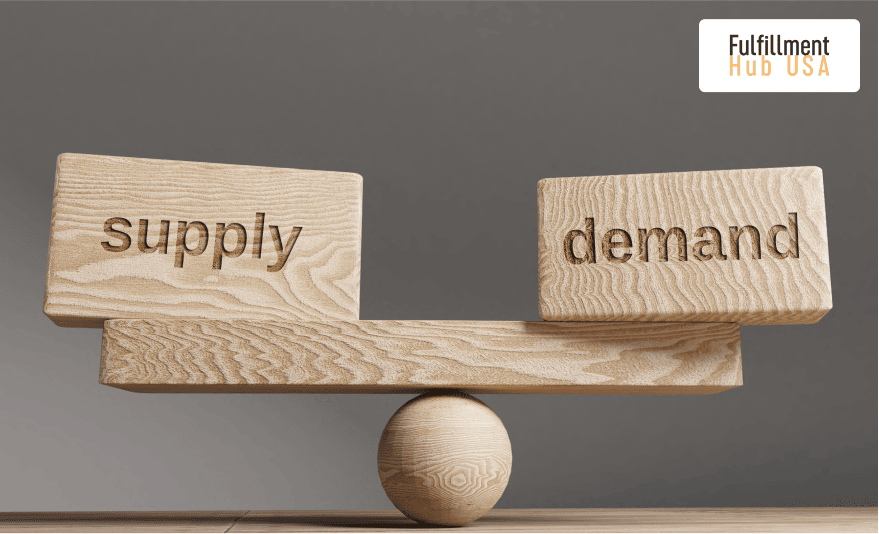
Imagine you have spent a fortune and plenty of resources running countless campaigns over various channels to promote your products. And finally, when you have successfully created a hype and customers are looking for the product, your worst nightmare comes true when your products run out of stock. Such a situation may arise due to the lack of a proper demand planning strategy.    What is Demand Planning?  Demand planning is an integral part of supply chain management that enables an organization to forecast future demand and effectively optimize the organization’s output based on the demand forecast. Explicitly, demand planning is the process of adjusting product or service availability according to the demand anticipation.    The main purpose of demand planning is to maintain a proper supply and demand balance, meaning the store inventory is supposed to contain just as many products as the demand side seeks. There is a thin line between sufficiency and surplus, and demand planning strives to achieve that thin line in an organization. Demand planning also includes constant marketing and promotional efforts to increase demand for the products or services.    Why Is It Important for Your Business? For online stores and e-commerce sites that have just started, demand planning may not be necessary at this stage. But it is absolutely essential for a rapidly growing e-commerce business. Still wondering whether you should really implement a demand planning strategy? The following points might change your mind.   To Keep Customers Satisfied It is hard to retain a customer once they have had a bad experience with your online store. However, with a solid demand planning strategy, you can ensure that your customers keep coming back for more.    For any business, keeping its customers happy is priority number one. And would your customers be happy and satisfied with your business if it cannot fulfill their demands?    Therefore, it is essential to avoid customer dissatisfaction and retain customers.     To Maintain Ample Inventory Levels Demand planning allows you to be aware of exactly how much stock you need to hoard. So that your bestselling products never run out of stock when you need them the most. With a proper demand planning strategy, you will be able to order a new batch of stock at your supplier before your inventory runs dry.   For Meeting Increasing Customer Demand E-commerce business is like a herd of sheep; it grows at a meteoric rate under optimum conditions. Demand planning will help you keep up with the rising customer demand when you have started getting traction in your e-commerce business with more customers looking for your products and increasing product demand.   Steps Involved in Demand Planning Process Demand planning in itself is a vast subject. It will become vague if we don’t break down the complex demand planning process into smaller, more understandable elements.    Collecting Past Data It all starts from here – Collecting data!    Putting together the past data of your business enables demand planners to understand products’ demand patterns from a historical perspective. Demand planners research both internal and external factors to gather the necessary information to forecast demand.    Internal sources are company sales, customer trends, seasonal data, and historical sales. On the other hand, external factors that impact the demand for a product include but are not limited to labor force change, natural disasters, pandemics, economic shifts, global crisis, etc.    Modeling Past Data Creating a demand prediction by feeding your company’s past data to an algorithm or an artificial intelligence built to predict the future demand for your products.     Weighing Demand Forecast Against Inventory This is where the magic of demand planning happens; in this step, planners realize how much stock they need in order to hoard to match the demand, including a little bit extra as buffer stock.     Trade Promotion Trade promotion in terms of demand planning is a process that exists between retailers/wholesalers and manufacturers rather than the end customer.    It refers to the various methods of marketing and promotion directed towards retailers by manufacturers to increase the demand in retail stores. Trade promotion offers retailers special discounts, free display racks, gifts, incentives to keep good relations with retailers.   Product Life Cycle Management Product life cycle management is the process of managing the product’s lifecycle right from its introduction to retirement. It plays a vital role in demand planning since it allows demand planners to understand the impact a new product has on its existing product.    Replenishment Planning Replenishment planning is the process of balancing the inventory level with the demand. In layman’s terms, the process of reordering or restocking your inventory to exactly match the demand. However, replenishment planning is not just limited to reordering your stock. It also helps you understand the stock level necessary to avoid building up surplus products.     In addition, replenishment planning tells demand planners exactly when to place an order, considering the time required by the supplier to deliver the products to you. With the help of replenishment planning, you will be able to restock your inventory before it runs out.    Popular Demand Forecasting Models Speaking succinctly, demand forecasting methods are broadly categorized as qualitative and quantitative. Generally, qualitative demand forecasting methods are implemented by businesses when historical sales data does not exist. On the contrary, in the quantitative forecasting method, advanced technologies like machine learning and artificial intelligence churn out mountains of data to predict the future demand of your product.    Trend Projection Trend projection is the method in which the sales data of the last few fiscal years (minimum 2-3 years) is used to predict the future demand for a product. It is the easiest and most straightforward method of demand prediction.    Trend projection forecasting, however, has its own limitation – Unexpected Changes! This forecasting model does not include some external factors that affect the sales of a product, like a natural disaster or a pandemic in the equation.    Sales Force Composite Sales force composite is a forecasting method in which the demand forecast of a product is generated by consolidating the

Demand Planning: What is it? And why is it important? Leer más »

Social Commerce: What It Is, Benefits, and Effective Tips

Social Commerce: What It Is, Benefits, and Effective Tips

Have you ever come across a product that you can buy with a single click while scrolling Instagram? Probably yes, right? This is one of the new trends of eCommerce. Targeting your right audience on the social media platform is becoming the new normal for the eCommerce industry. Social commerce is about engaging customers in an effective way. In this blog, let’s explore what it incorporates, its benefits, and some top tips for establishing an effective omnichannel social commerce.     Fundamentals of Social Commerce   Social commerce is the convergence of eCommerce and social media. Brands in social commerce use social media to sell and drive sales for their eCommerce business. But is it worth it? Will people continue to use it? Well, the answers to these queries are YES. According to Statista, sales through social media platforms were approximately $560 billion in 2020. And that’s just the beginning. It’s forecasted that social commerce sales will reach about $2.9 trillion by 2026.   This figure shows that social commerce is a booming industry and is highly likely to grow in the near future. Therefore, it is the right and profitable time to jump into the industry.   What is Social Commerce? Social commerce is the process of selling products directly through social media. The integration of social experience and eCommerce is enabled through social commerce. It is generally mistaken with social media marketing. There is a difference between SMM (social media marketing) and social commerce. When you promote your brand and drive the customers to your eCommerce website, that’s marketing. On the other hand, social commerce is to generate sales and revenue completely through social media. Social commerce ensures a seamless and easy experience for digital shoppers.   Though social commerce and social media marketing go hand-in-hand, you can manage everything from social media, from selling, displaying products, creating catalogs to resolving customers’ queries hassle-free. Hence, it is easy to sell and manage your business without a website.   Social Commerce Ecosystem  When your social commerce setup is fully developed, shoppers can complete the process of payment and checkout without ever leaving the platform. Shoppers can even connect with the customers via the social media app’s messaging features or with AI-driven chatbots.    Social commerce engages customers in 3 principal ways:   Content-Driven: Social media posts with content related to the latest products and services. It leads to brand discovery, engagement, and action.   Experience-Driven: In today’s technology-driven era, there are numerous experience-driven channels like Livestream and AR/VR. If you include the latest technology, it enhances your visitors’ and customers’ experience.   Network-Driven: When you are driving a network-driven community like Meesho and Alibaba, you make your brand fun, valuable, and purpose-driven for your customers.   Whether you are a brand or an individual, the social commerce market has growth potential for you. It is efficient, rapidly growing, and cost-effective.   Benefits of Social Commerce   Social commerce is becoming the new normal of today’s world because of the immense benefits it offers. Some of them are:   Drive Authentic Engagement   Social networks allow businesses to relate, not just sell. Showing up in your customers’ news feed consistently creates an opportunity for you to interact with your customers. It further allows you to enhance the authenticity of your business and helps consumers make an informed purchase decision.    Engaging content like videos, polls, stories and contests can do wonders for your brand. It makes your audience feel connected to your brand.   Build Trust and Loyalty   When you are on social media sharing engaging content and showing people the person behind the brand, it is highly likely that your consumers will trust you. Moreover, people trust other people more than brands.   If your numerous satisfied customers are leaving good reviews on your social media page, potential customers are highly likely to trust you more and purchase your products. Therefore, focus more on posting reviews and feedback, behind-the-scenes video clips or Livestream, who you are as a person, and more content that helps you connect with your audience.    Make Buyers’ Journey Frictionless   At the core, social commerce is all about making the buyers’ journey easy. When consumers shop on social media, it is frictionless for them to follow through from product discovery to purchase. It removes the potential for uncertainty and cart abandonment, which is higher in traditional eCommerce stores.   Buying from social media is a seamless experience. For example, in Pinterest’s checkout process, the consumers browse the platform and save the products/posts they like. From there, they can press the ‘Buy’ button and purchase the product right there. The payment process is smooth, making the complete buying journey seamless.   Make Your Brand Global   When you sell from social media shops, you make your brand global. That is the best thing about social commerce; it has no geographical boundaries. So to target the international audience, there is no better platform than social media.    Social platforms make it easy for brands to expand their reach and market their products internationally. To make this happen for your business, you need an effective social commerce plan and strategy. People from all over the world are on social media and changing the way they shop online, and this is the time for you to make the most out of it before it’s too late.   Tips for Effective Social Commerce   Social Commerce is a win-win for everyone. However, it can be tricky. Therefore, here are some effective tips to help you win through the social commerce game.   Price Matters   If you are selling luxury products or high-end appliances, you will likely not receive the same engagement and sales as lower-priced retailers. In the social commerce space, lower-priced items sell better.   You can sell multiple products at different price points and use your ad spend for lower-priced products. Moreover, while your customer is making a purchase, don’t forget to grab an email address. So, you can sell them a bigger ticket item later on.   Automated Bot Checkout   Having an AI chatbot automates as much as 80% of your customer support conversations. An AI

Social Commerce: What It Is, Benefits, and Effective Tips Leer más »

Fulfillment By Amazon - What it is and How does it Work

Fulfillment By Amazon – What it is and How does it Work?

Selling on e-commerce platforms has never been an easy task. It becomes even more difficult if you are a solo entrepreneur and handling all the aspects of your business alone. You need to manage marketing, ads, storing, shipping, and much more. Sounds hectic, right? Relax! FBA is your one-stop solution.   FBA not only makes online selling easy for you but also exposes your business to a wide range of customers. According to a report, Fulfillment by Amazon helps sellers to increase their sales by 30% to 50%. The data reflects that FBA is one of the best programs to take your business to the next level. Sounds interesting, right? Continue reading the article to find out all about FBA and get started.   All About FBA  Selling on e-commerce platforms has never been an easy task. It becomes even more difficult if you are a solo entrepreneur and handling all the aspects of your business alone. You need to manage marketing, ads, storing, shipping, and much more. Sounds hectic, right? Relax! Fulfillment Hub USA is your one-stop solution.   FBA not only makes online selling easy for you but also exposes your business to a wide range of customers. According to a report, Fulfillment by Amazon helps sellers to increase their sales by 30% to 50%. The data reflects that FBA is one of the best programs to take your business to the next level. Sounds interesting, right? Continue reading the article to find out all about FBA and get started.   What is FBA?  Fulfillment by Amazon or FBA is a service offered by Amazon for third-party sellers with the intent to automate their shipping services and order fulfillment process. It’s an easy and hassle-free concept: Sellers sell, Amazon fulfills, and ships.      If sellers enroll for FBA, then Amazon handles shipping, product warehousing, and returns and refunds for them. Moreover, Amazon also takes care of the picking, packing, and replacement for the sellers who take the FBA service. In this service, all sellers have to do is send their products to Amazon, which then processes all the orders that come in. Sellers need to make sure that Amazon has proper stocks of their products and the rest is taken care of.   Now you must be thinking, do sellers have to pay any fee to Amazon? The answer is yes. In return for that fee, you get amazing services by Amazon, including:  24/7 customer service.  Access to the most impressive and advanced fulfillment network.   All the picking, packaging, shipping, and fulfillment costs are included in this service.  Starting an e-commerce business can be a daunting task without the right platform. Amazon offers opportunities to various businesses to sell online in a hassle-free manner and reach a broader spectrum of audiences.   FBA is always a good choice for most of the products but might not be an ideal solution for large dimension products or low-volume items. Though it offers amazing selling opportunities, it is not the best solution for every seller. Now the question is how to decide whether it is a good solution for you or not? Relax! We are here at the rescue.   Lets’ dig into the features, pros, and cons of FBA to make a well-researched and better decision.   Fulfilled by Amazon (FBA) Vs. Seller Fulfilled Prime (SFP)  In order to better understand what FBA is and what its benefits are, let’s first understand the primary differences between seller fulfilled prime and FBA.   If you want to sell your products to valuable Prime customers, but are not willing to pay the fees for FBA service, then you can opt for a Seller-Fulfilled Prime account. In this account, you need to handle the fulfillment of your orders and products. To succinctly describe, you get access to Amazon Prime name and shipping guidelines; however, you have to handle fulfillment, picking, packing, and shipping on your own.   In addition to this, when you opt for Seller Fulfilled Prime, you have to take care of all the returns, refunds, and shipping costs. However, when you choose FBA, Amazon takes care of all the shipping costs for you. Here are some of the major differences between FBA and SFP.   S.no SFP FBA 1. Sellers have to pay all the shipping costs  Amazon handles the shipping costs.  2. Sellers have to take care of pick, pack, fulfillment, and shipping.   Amazon takes care of fulfillment, pick, pack, and shipping.   3. Sellers are responsible to handle inventory and storage in SFP.  In FBA, Amazon handles storage and inventory for the sellers.   4. Sellers need to pay for multiple things like inventory, shipping, and returns. In FBA, sellers need to pay only pay once i.e. the fee and Amazon takes care of the rest of the things.   5. SFP programs are a bit complicated and hectic as sellers need to handle everything from packing to shipping.  FBA programs are easy and hassle-free, as all you need to do is send your products to Amazon and pay the fee.   In both the programs, sellers need to work with Amazon’s guidelines and rules related to returns, refunds, exchanges, and other things to match the standards customers are expecting from Amazon. Ultimately, in SFP, the sellers need to do a lot of work; therefore, small sellers and brands opt for the FBA program. It is the best way to expand your business and boost profit margins. Pros and Cons of FBA  In order to decide whether FBA is the right pick for your business, it is better to go through the pros and cons. It will help you know what is best for your business according to the current situation. Pros of FBA  Fulfillment by Amazon is profoundly beneficial for small sellers and new retailers seeking a larger marketplace. Moreover, it allows you to extend your customer base and boost your profit margins. That’s not it. Here are some of the major advantages of FBA.   Discounted Shipping Rates  Amazon is one of the most popular shopping platforms and is a global fulfillment giant. If you opt for FBA, you have to spend less on shipping costs. Therefore, even

Fulfillment By Amazon – What it is and How does it Work? Leer más »

Understanding Flat Rate Shipping for eCommerce Business

Understanding Flat Rate Shipping for eCommerce Business

Flat rate shipping is when the shipping cost is independent of the weight of the package. Consumers pay a fixed amount for all the packages that fall under the pre-decided criteria. But how do you decide if flat rate shipping is right for your eCommerce business?  Here’s the solution: an article guiding you through the fundamentals of flat rate shipping and if it is the right choice for you. So, let’s dive right into it.  Ins and Outs of Flat Rate Shipping  Flat rate shipping is a technique for deciding how to price your shipping. When you charge a fixed rate for every order, it becomes easy to track and manage expenses. Whether you fulfill orders in-house or outsource to a 3PL, you can inculcate the flat rate method for your customers.  All major shipping carriers like FedEx, USPS, and UPS, have a different flat-rate shipping program. Opting for the best of them can be a tough choice. But before you decide that, let’s understand what the flat rate method is and if you should use it for your eCommerce business or not.  What is Flat Rate Shipping?   Flat rate shipping is a type of shipping where the rate is based on the size of the box. Therefore, any weight can be shipped at the same price, as long as it stays under the box’s maximum weight. Hence, in one price slab, you can ship heavy as well as lightweight packages.  Due to the nature of this kind of shipping, it is known as Linear Rate. Irrespective of the weight, size and other dimensions, a linear shipping rate applies to all types of shipping boxes and packages in the same slab. Therefore, shipping heavy parcels are more beneficial than smaller ones in flat rate shipping.  Difference between Flat Rate Shipping and Standard Shipping   The common factor in both of them is that they both are pricing strategies for shipping your orders. But they are different in many ways.  As the name suggests, standard shipping is the general shipping method in which the price is based on destination location and distance, box dimensions, and weight. It is a pricing strategy that is used for longer or un-prioritized deliveries. The delivery time for standard shipping can vary depending on the packages and can be anywhere between 5-15 days.  Flat rate shipping is the type of shipping where the buyer pays a fixed price for any item that ships within a weight slab. It can vary according to different shipping zones. For example, the flat rate may differ according to the location and the zone where the item needs to be shipped. Moreover, there is a predetermined delivery time in the flat rate method that cannot be altered. Factors affecting Flat rate Shipping Method   Now that it is clear that flat rate shipping is affected by the weight, time zone, and box dimensions, let’s dive into each factor in detail.  Weight  The weight slab is decided by the seller or the shipment companies under which the flat shipping rate is applied. For example, the slab can be set to 50 pounds, as FedEx does. Then, all the boxes or parcels below that weight are eligible for a flat rate. The slab is always set to make matters simple.  Time Zone  One factor that you must consider while providing a flat shipping rate to your customers is time zone. Shipping costs differ with the time zone. If the destination time zone is closer to your location, shipment prices will be lower as well. Conversely, the farther the time zone, the costlier the shipment. Hence, having multiple customers of the same time zone is definitely an advantage for you.  Dimensions  Generally, shipping companies have a fixed size for boxes. This way, they keep the shipping process smooth and consistent. Moreover, they have containers of the specified dimensions. And flat rate method can have a specified dimension or slab to ship the parcels.  Advantages of Flat Rate Shipping The basis of the flat rate method is that it is ideal for everyone under the same time zone, weight, and dimension slab. So now let’s have a look at some advantages of it.  Clarity and Transparency  When you provide flat rate shipping to your customers, it brings them clarity for your selling mechanism. In addition, it establishes transparency in pricing between you and your customer because of the fixed shipping price and no additional or hidden costs. This clarity and transparency help you gain trust among your consumers.  Simplified Management  Smooth management of every process in the business is essential for it to be successful. Unlike standard shipping, you save a lot of time in flat shipping by calculating a pre-defined price for different slabs. Hence, the process in the flat rate method is simplified. Additionally, you don’t need to add a shipping calculator to your eCommerce website. Less Errors and Quick Response  When products are shipped using standard shipping, there are a lot of calculations. Most time is spent calculating shipping costs by measuring tons and tons of boxes’ weight and dimensions. Not to forget, this has a probability of human errors. All such errors have less chance to occur in the flat rate method because of a fixed price.  Consistency in Pricing  The one advantage of the flat rate method is consistent pricing. No matter the weight or dimensions of the parcel, it is the exact price under the same slab. Hence, flat rate shipping makes it easy to calculate shipping charges along with saving time and effort. However, before you opt for any logistics partner, check the kind of slabs they have set for different factors.  Should I use Flat Rate Shipping? Flat rate shipping has many advantages that make it an appealing service for eCommerce businesses. First, you are well aware of the costs when you ship in a flat rate box. Second, there is no need to use the shipping price calculator plugin on your website because of the fixed price. Hence, to save time on shipping calculations, the flat rate method is one of the best choices.  For small businesses, the flat rate method can generate huge savings because of the lower, predictable cost. Of course, it doesn’t make sense for

Understanding Flat Rate Shipping for eCommerce Business Leer más »