Supplement fulfillment scoping guide
Fit, boundaries, and launch requirements
This workflow is intended for brands with eligible packaged supplement or nutraceutical products that need receiving, inventory control, storage, pick and pack, kitting, shipping handoff, and returns support. Product type, packaging, storage needs, sales channels, and required data fields must be reviewed before inventory is scheduled.
Fulfillment Hub USA is not the manufacturer, formulator, testing laboratory, regulatory adviser, or owner of the brand product. The merchant remains responsible for ingredients, formulation, registrations, labels, marketing claims, legal compliance, recalls, and the accuracy of product and lot data supplied to the warehouse.
Vertical operating workflow
The operating plan should define the product eligibility decision, inbound documentation, carton and unit checks, SKU setup, lot and expiration fields, status controls, storage rules, order allocation, packaging, carrier handoff, returns, and exception ownership. No compliance-sensitive field should depend on a warehouse employee guessing from the package.
If the brand wants first-expired-first-out allocation, subscription kits, promotional bundles, inserts, relabeling, or special return handling, those instructions should be version controlled before launch and tested on a small inbound and outbound sample.
- Provide an approved SKU master with unit, carton, lot, expiration, barcode, and storage fields required for the workflow.
- Define receiving holds, discrepancy thresholds, damaged-product handling, and who can release quarantined inventory.
- Document pick, pack, kit, insert, labeling, carrier, and customer-order exception rules.
- Approve return-to-stock, quarantine, disposal, recall, and reporting responsibilities before the first return arrives.
Illustrative operating example
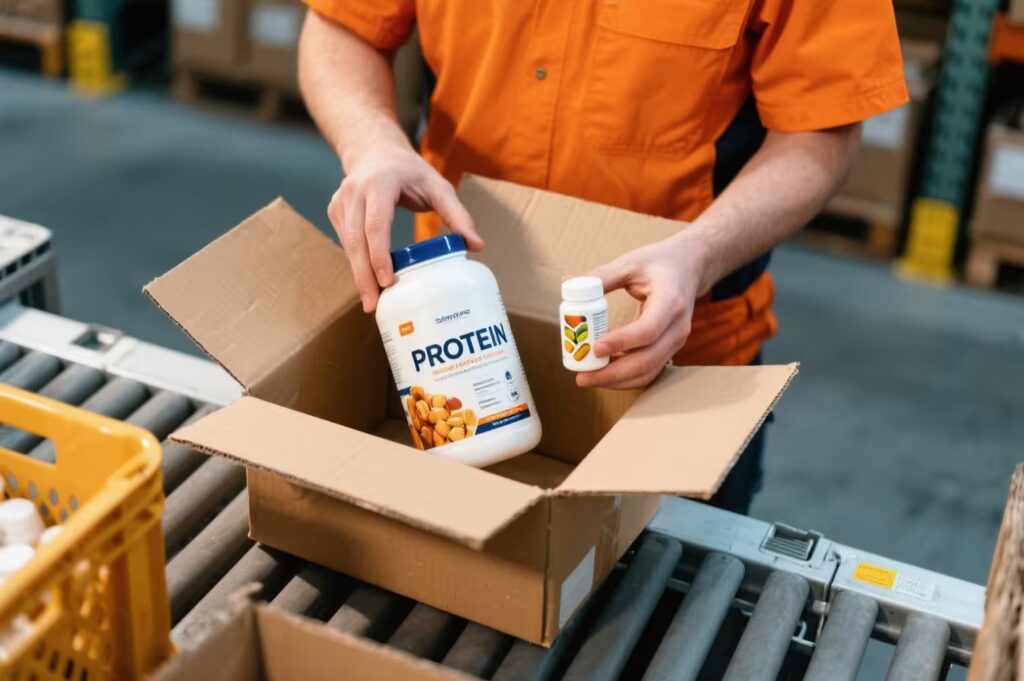
An illustrative monthly wellness program receives three eligible packaged products with brand-supplied lot and expiration data, stages approved inserts, assembles one defined kit version, and releases subscriber orders on a documented calendar. The warehouse records shortages, damaged units, data mismatches, and late component arrivals instead of substituting products without authorization.
This example demonstrates a process, not a customer result. Actual product eligibility, data availability, storage profile, order volume, cutoffs, and carrier options must be reviewed for the account.
Pricing and evidence
Pricing is scoped from units per order, SKU and lot complexity, receiving cadence, pallet or bin use, packaging materials, assembly steps, labeling, return rules, reporting needs, and exception work. The pricing page explains the cost categories; a final quote follows product and workflow review.
Public service references checked August 18, 2026. This page is a scoping guide, not a service guarantee, legal opinion, or regulatory approval. Final eligibility, capacity, timing, and pricing are confirmed in the written operating scope.